ads

Slider[Style1]

Style2

Style3[OneLeft]

Style3[OneRight]

Style4

Style5

Slot Coverage Variations

400th post, y'all


After covering front matching previously, we can now explore options available to handle slot sets that are separated from the box. Typically, this is best understood from a 2-back look with a single receiver on the other side of the slot (allowing a variety of bracket looks and the linebackers matching back flow). The passing strength is immediately identified (slot) and the safety, corner, and overhang player can communicate how they would handle the 2-man routes out of this. These methods can also be applied independently to each side (split-field) when facing 1-back, as well.
 
With two receivers split from the formation (slot) you end up with a 3-on-2 advantage for the defense. As we covered before, there is a variety of ways to handle this. In attempt to tackle two things at once, we’ll cover these concepts using Saban-speak (out of Nick Saban’s playbooks). It should be noted that Saban’s “system” is extremely concise, flexible, and modular (in its application). What comes with those benefits is a dictionary full of terminology to communicate every conceivable action and response on the field. We’ll use his method as a way to keep a central thematic framework, but these concepts are relative to what everyone else does (so don’t get hung up on the verbiage).
FIST

The first is basic Cover 3 Sky (“Fist”) with what amounts to be the old “country cover 3”. Fist brings the overhang player down outside of #2 receiver serving as primary force. This defender will drop into the seam and not carry any route by #2 deeper than 12 yards and jump the first receiver to the flat. The corner would play all of #1 receiver vertical (or #2) out and up. The free safety would play middle of the field to the #2 receiver. Because these two receivers are handled by these three players, additional receivers (releasing back) would be immediately jumped by the next linebacker inside (Will) unless #1 or #2 released inside.
 
Examples of matching in Fist
     
Exceptions
  • Vs 1 back – the FS will check to Rip/Liz rules (match left/right away side) and man #1 and #2.
  • Vs Wide slot split (horizontal stretch) – with a great deal of space underneath to cover, a “TOKYO” (smash rule) call can be made to have the corner take all short routes and have the overhang defender carry a vertical stem.
 
Sky (Fist) remains an all-purpose coverage solution to slot, but can face limitations with quick 2-man games against the overhang player.


COVER R - ROBBER

We’ve covered robber coverage before and this version would be just like Virginia Tech plays it. This is best against a tight #2 with the FS dropping into the seam and the overhang player immediately expanding to the curl. This isn’t much different than TCU’s ‘2 Read’ (covered before). The FS acts as the robber, reading #2-to-#1, playing the front hook with a #2-to-QB-to-Alley fit progression.
 
The corner immediately drops to the deep third with the overhang defender jumping first receiver to the flat. With the corner committing to the deep half, any vertical route by #2 will be bracketed inside-out by the FS and corner.
examples of matching in robber
    
Robber coverage remains arguably one of the best run down solutions, especially to the field.  1-back looks can be handled by robber, but do not provide the leverage security that 2-back does.


COVER 2 - CORA

This is traditional cover 2 cloud with the FS over the top in deep half coverage and defenders in the curl and flat. The overhang player will align inside #2 and the corner outside of #1.  With two outside underneath zone defenders on top of two split receivers, you have the ability to aggressively attack the quick game.  With any slot coverage, you are only as good as your answer to the smash route.  With true ‘Cora’, the force corner will sink in the flat (playing “TOKYO”) and the overhang will carry #2 vertical.

 
examples of matching in Cover 2  
      
 
Cover 2 is great against quick game and perimeter run game.  How a defense matches vertical routes in Cover 2 will typically be its weak spot.
 
 
One adjustment to this Cover 2 look is known as “Leach”. It is exactly the same with the exception of the overhang defender is man-to-man #2 (slot/curl). This would afford the (usually exceptional) slot receiver to be double-covered underneath or deep with the surrounding zone defenders.
 

COVER 4 - THUMBS

Thumbs is a 3-on-2 quarters principle that can morph itself into swipe bracket when only one receiver is vertical. The FS will double #1 or #2 from inside out with the corner playing deep third outside.  The overhang player is the sole underneath defender and will take first shallow out / in receiver between #1 & #2.
examples of matching in thumbs 


Quarters is great against vertical game and play-action, but the lack of underneath support can cause perimeter leverage issues the offense can exploit.
   

COVER 5 – COUGAR / IOWA
Adding this as a final thought, Cover 5 is the man-under with deep half help. The FS will rob everything inside with the ability to double either receiver deep.  I didn’t provide any illustrations as it is pretty self-explanatory and is the ideal passing coverage.  The FS will rob everything from the inside.  Because the corner (your best cover guy) will be man-to-man on #1 outside wide “on an island”, you will typically have a 2-on-1 cone/bracket on #2 between the deep safety and the overhang player.

Get Back To Fundamentals: Coverages

Here for your reference archives – basic examples of the types of coverages everyone runs; 1-high to 2-high.  For more information, click on the hyperlinks/tags of each coverage type for previous entries for more in-depth explanations of what you’re seeing.

COVER 1


COVER 2


COVER 3

Backer force

Safety support

Corner support


COVER 4


COVER 5 (2 Man Under)


Unrelated to everything.... Just passing along an interesting development in artistry.....something interesting is afoot with one of our time's most creative storytelling voice, David Simon (and company).  Simon, of "The Wire" fame (and brilliant treatment of "The Corner" and "Generation Kill"), is deep in his current passion; the unique Americana invention of New Orleans music told through its principle actors (the musicians). The visual-novel of  "Treme" nearing the end of its second season has become an acquired taste for many.  Those missing out on the brilliance in its subtleties (it isn't meant to be swallowed whole, but savored by digesting each scene) of scenes and dialogue are losing sight of what the series (and Simon's craft) is about. I felt it was worth noting as the appreciation of performance art (and original storytelling) is becoming a dying craft.  Perhaps best summarized here by actor Clarke Peters.
My point in offering these thoughts is to pass along an observation of the use of technology as the social apparatus of our time.  The series (like any other event) is being chronicled online in various blogs.  One of which, Back of Town ,  has become a way of appreciating the episodes with many people responsible for telling this story.  With regular, affable interaction with (the real) Davis Rogan, Tom Piazza, David Simon, and Eric Overmyer and from the perspective of a 1-to-1 relationship (and not that of a lecturer or host), giving participants the organic feeling of being involved in the actual process.  This type of discourse wouldn't have been possible even five years ago - its exciting to watch this process develop, especially in the environment that this series has found itself in; a humble and artistic community of writers with a production geared for the exact opposite [commercial] appeal of its on-air counterparts.  I'm not sure what will come of it, nor am I star-struck that the production team would interact with consumers, but how it shapes the course of artist-audience relationship is something to watch.

Cover 2 DB Drills: Raheem Morris


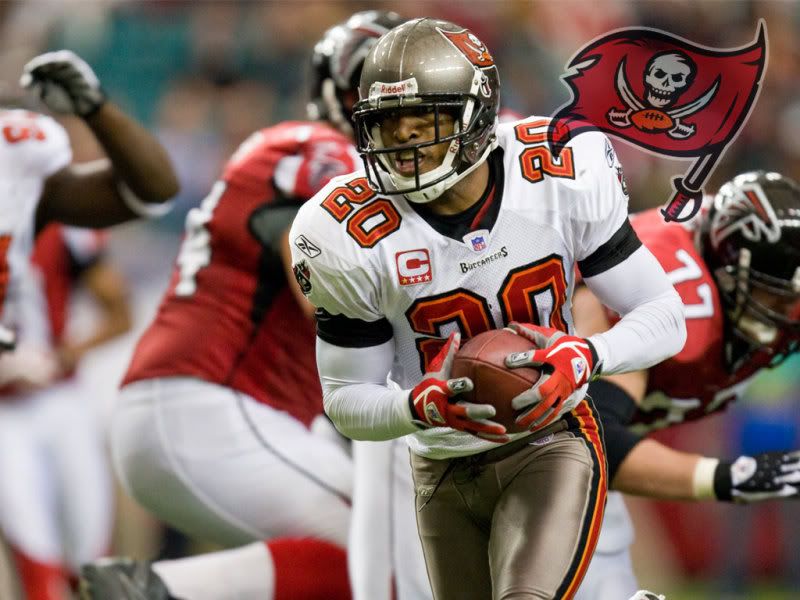
Some cornerback drills care of Raheem Morris during the dominant years of the Tampa Bay Buccaneers defense featuring one of the most physical corners in recent memory, Ronde Barber. 

There are some great stimulus-response drills to handle #1 receiver stems (inside, outside, vertical) and run-support leverage.  This starts with individual work handling stems/breaks, then moves to leveraging specific routes (out of C2).  With group work, these same recognition work is carried over and speeds up the “looking for work” process when #1 clears.  The film concludes with team practice clips against Gruden’s offense (against Cover 2).


Be sure to check out past Cover 2 entries for more in-depth writing.

TCU "2 Read": Adaptation To The Spread (3x1)

The robber rules of “2 Read” are rather simple and the biggest part understanding TCU defensive scheme is just coming to grips and accepting the split-formation concept they utilize.
Using the same “2 Read” technique rules we already covered, we plainly go over adding another receiver (3) to the read side.
To the trips side, the free safety and corner will be playing straight drop back and essentially end up in a split field ¼ match. The primary adjustment becomes the strong safety. He will be outside of the #2 receiver. He is going to play standard “blue” coverage rules, staying on #2 to prevent three verticals. He will still “Swing deep to 3” but he is not looking to jump the flats as he was versus 2 receivers.

In the worst case scenario, “all verticals”, the corner will zone turn to bail and split the difference of #1 and #2 receivers. The free safety will backpedal weave leverage of the vertical #3 receiver. This is the ‘jailbreak’ option versus this coverage, if three verticals aren’t run to the trips side, the pattern distribution can easily be accounted for in the rules.

So if #2 receiver or #3 receiver is not vertical, now we're back to the manageable 2 receiver threat. If #3 runs a shallow out (for example) the free safety is no longer threatened in the middle of the field, so he will settle and look to rob any route by #2. The corner will have the post by #1 all day, so the free safety is free to look of #1.
Versus a standard trips flood (#3 shallow out, #2 sail, #1 is in), the corner would stick with his communication rules, call the “IN” by #1 and gain depth over the receivers. With the “IN” call, the strong safety will hang (on the curl) and break late on the out of #2.

This was just an overview of the split-formation coverage of TCU out of their robber package. Feel free to check out the RUNCODHIT articles on their usual 2x2 coverage (Blue/ Cover 5) that we’ll see a lot of in their push for National prominence this season.

Pattern Read: Hi Low

The last example that we'll show is the only other concept not threatening Cover 2 with a vertical concept. The high-low ("China" or "Smash") concept merely looks to create a vertical stretch on an underneath defender, putting him in a 2-on-1 conflict. As noted in the previous posts, watch the linebacker expand to the hook (underneath) with the safety (over the top) . This concept is evidenced with a shallow #1 and a vertical #2 or a vertical #1 and a shallow #2.

Pattern Read: Sail

Continuing on the same theme as Verticals, the "Sail" ("drop out" or "Ohio") concept relies on the same principles, but providing a deep high-low of the outside defender. This can be a difficult throw, but even more difficult to successfully defend. As detailed earlier, be sure to watch the linebacker wall and expand #2 as he vertically stems then drops out to the sideline.

Pattern Read: Verticals

As outlined in previous posts, the (all) verticals concept likely puts a 2-high defense at a disadvantage when 4 receivers go deep. Pay special attention to how the linebackers wall and carry #2 vertically into the seam, as well as how the corner sink and carry #1 vertical. Also, note how 3x1 formations cause a 2-high defense stress with #3 stemming into the deep middle hole.

Pattern Read: Safety Response

The last step in this Cover 2 discussion ends with the ½ field safety. Obviously their job is to put the roof over the defense and allow all other defenders to play underneath. To do this job effectively and consistently, they must know how they relate to the pattern distribution. This will reveal how they will compensate for coverage liabilities and better support the coverage shell.

Their first response is to key and recognize the #1 receiver to their side. The position of the #1 receiver will determine the immediate threat to ‘break’ the defense by an outside and vertical throw. The safety should know who the #2 vertical threat is on any given down based on formation (2x2 or (3x1).


At the snap, the safety will key the EMOL for run/pass key. After a pass key recognition, the safety reads #1 receiver – to quarterback – to #2 receiver.

#1 Vertical - #2 To The Flat


The safety should overplay the vertical threat and keep inside leverage on #1. He is anticipating the curl-flat concept.


#1 Hitch - #2 Vertical
With #2 vertical and #1 remaining shallow, the safety should expect the smash or seam concept. He will peddle back and inside read #2 as he presses into the seam. The safety should be defending the seam-to-post-corner route with inside-out leverage.

Double slant


With #2 and #1 breaking shallow inside, there isn’t much help a deep half safety can provide. He should be anticipating the slant-and-go (“sluggo”) and remain over the top of #1, leveraging inside-out.


#1 Vertical - #2 inside or hitch


Since #2 remains shallow, he is no threat to the deep half, so the safety should look to overplay the vertical by #1. With #2 shallow, he should keep inside leverage on #1and anticipate a deep, inside breaking route (dig) from #1.

Pattern Read: Linebacker Response

After reviewing corner responses, we'll work our way outside-in, addressing the outside and inside linebacker responses to pattern distribution in Cover 2.

Outside Linebacker (weak)
The weak side linebacker who responds to the displaced #2 receiver should be playing a "vertical hook technique". This simply means he is controlling the vertical stem of #2 into the hook zone and will treat this area as a priority. He should be thinking vertical-in-the-seam by #2 on pass key, and defend this throw first. On pass, he must relate to #2 receiver. He will peek to #1 receiver to identify the route concept he should play. As the front will vary depending on formation, we'll focus on just the pass coverage of Cover 2 for the displaced outside linebacker.

#2 Vertical - #1 Outside Vertical

If #2 presses vertically, the WLB will wall and carry #2 into the seam, peeking to see that #1 is vertical (and outside). With #1 gaining depth outside, the WLB can expect the "all vertical" and / or anticipate a deep drop out / Sail from #2 (and rob from low-shoulder leverage.

#2 Vertical - #1 Inside Vertical

As with the above situation, the WLB walls and carries #2 vertically into the seam, expecting "all verticals". With an inside/vertical stem of #1, the WLB may anticipate a deep, inside breaking route (dig).

#2 Vertical and Outside - #1 Hitch

With a vertical press by #2, and #1 remaining shallow (hitch), the WLB should anticipate the "smash" concept and push to the flat. Knowing his corner should be sinking to take the "corner" route, he should be robbing the hitch from inside-and-underneath leverage.

#2 Flat

Maybe the easiest throw to respond to for the WLB in Cover 2, once the #2 receiver quickly "shoots" to the flat, the WLB should recognize the flat-curl concept. He should expand and wall to the #1 receiver, looking to rob the inside-breaking curl.

Cover 2 Inside Linebackers

In Cover 2, the inside linebackers, both strong and weak, will be keying for run as their primary responsibility. Their gap assignment and key will vary depending on the formation and defensive front they are in. They are reading run-to-pass, and respond accordingly. For the sake of discussion, we will just concentrate on their response after getting a high-hat pass read.

The inside linebackers will match their respective threat based on alignment. This will typically put the SLB or MLB TO or AWAY from the callside based on the strength of formation. An example would be;

2x2 set

The MLB will relate to the back (#3) strong or weak, based on back flow.
The SLB/Buck become relates to #2 strong and becomes the vertical seam player him.

3x1 set


Here the defensive front would be adjusted to accommodate the passing (number) threats. The MLB now relates to #3 receiver and the SLB/Buck will relate to the back.

This is a rather simple accommodation as I hesitate to call it an "adjustment". The inside (run) linebackers are simply going to cover down their immediate passing threat. An example of matching the backs with the linebackers is shown below;

Pattern Read: Corner Response

One of the advantages of the 7-man front is ability to eliminate the perimeter with a corner as a force run defender (essentially allowing 9 to stop the run). Consequently, the one drastically different response in Cover 2, will be from the corners. The following will outline how corners are to handle and respond to threats in their zone, and whom they should be relating to.

In Cover 2, corners relate to the #1 receiver and keying the end man on the line of scrimmage for a pass/run key. On run action TO him, the corner should maintain (outside) leverage on #1 and squeeze the running lane to shut off the perimeter from the ball carrier. On run action away from him, he should sink and expand in relation to #1 (again, maintaining leverage as run force).

On pass read from the EMOL, the corner should immediately scan the stem of the #2 receiver, to determine how he responds to the route.

#2 Inside - #1 Vertical


If #2 takes an immediate inside release, he can rest assured that #2 will not be threatening the flats (no longer a threat) and can focus his attention on the #1 receiver (who will likely be running an inside breaking route). When #2 does not present a threat to the corner, he will reroute and carry #1.

#2 Outside - #1 Vertical Inside

If #2 releases outside (again being the key the corner looks to on pass read) AND #1 stems vertically and inside, he should expect a high-low pattern and sink and carry #1 (the deeper of the two routes). Much like the 'smash' route below, if the corner does not sink on the deeper throw it will create an unwinable situation for the defense, as the corner will be too shallow and the safety to contracted to defend this deep, outside throw.

#2 Flat - #1 Vertical Outside


With #2 shooting to the flat (immediate threat) and #2 stemming outside and vertical (fade), the corner should look to expand #1 for width to the sideline and spy the QB's vision/shoulders on which throw to pursue. By expanding and delaying #1 vertically, he is buying time for the playside safety to cover ground on a downfield throw outside the numbers. The corner should expect the flat throw (as he is eliminating the deep throw confirmation read from the QB)

#2 Vertical - #1 Shallow


One of the most susceptible throws against Cover 2 is the shallow by #1 and the expect Smash , open hips play the '7' (corner) route. As mentioned above, this is a situation where if the corner bites on the shallow hitch, he opens the width to the deep sideline to a point where the half field safety is helpless to defend.

#2 Vertical - #1 Vertical

With #2 vertical and #1 vertical, the corner should expect "all go" (no other threat to the flat) and should collision #1 and carry his route vertically. With nothing left to defend, he can help the safety out (hopefully collisioning #1 enough to prevent both receivers getting vertically at the same level).

Get Back To Fundamentals: Cover 2

Cover 2 becomes a great way to even up a defense and provide a pseudo-9 man run front (with corners as force) and discourage intermediate passing with so many shallow zone defenders.
Great versus any even formation, like cover 4, it can bottle up and discourage two-man receiver routes. The main point of stress becomes the open hole (MOFO), but provides clear, distinct reads for both safeties.


Cover 2
Mike
You are responsible for middle hook. Your cover down is #3 strong. If TE releases inside you will “you me” with Sam and the TE is now #3. If the TE releases INSIDE and vertical you need to carry him.
Sam
You are responsible for weak side curl. Your cover down is 2 weak. If 2 goes vertical you need to reroute/collision his stem.
Will
You are responsible for weak side curl. Your cover down is 2 weak. If 2 goes vertical you need to reroute/collision his stem.

Strong Safety
You will wall TE. If TE releases inside fall to curl and your cover down will be #3. If TE releases OUTSIDE and vertical you will carry him..

Weak Safety

Align 15 yards deep, on top of #2 weak side or EMOL; your horizontal alignment will vary according to the spit of the receiver in relationship to the hash. You are secondary run support. You will play deep ½ off of #1’s release, post, post corner, dig. On float technique you will play deep ½ off of #2.

Free Safety
Align 15 yards deep, on top of #2 strong side; your horizontal alignment will vary according to the spit of the receiver in relationship to the hash. You are secondary run support. You will play deep ½ off of #2’s release

Corners
Align in press position with inside foot to outside foot of the receiver or neutral, balanced stance – you cannot allow the receiver to get outside you. You are primary run support on the perimeter. You are a collision / funnel player with flat responsibility vs. pass. If you have 2 quick receivers to your side (twins) use the float technique.

Top